


Gravel looks simple, but choosing the wrong type is the most common reason a driveway ruts, a path feels like walking on marbles or a drain clogs. The key differences are size, shape (angular or rounded) and whether the stone is washed or mixed with fine dust. Here is how the common types compare and which to use where.
Angular vs rounded stone
Crushed stone is broken by machines, so its pieces have sharp, flat faces that lock together when compacted. That makes it stable under cars and foot traffic. Rounded stone such as pea gravel and river rock has been smoothed by water; it looks attractive and drains well, but the pieces roll against each other, so it shifts underfoot and under tyres.
Common types of gravel
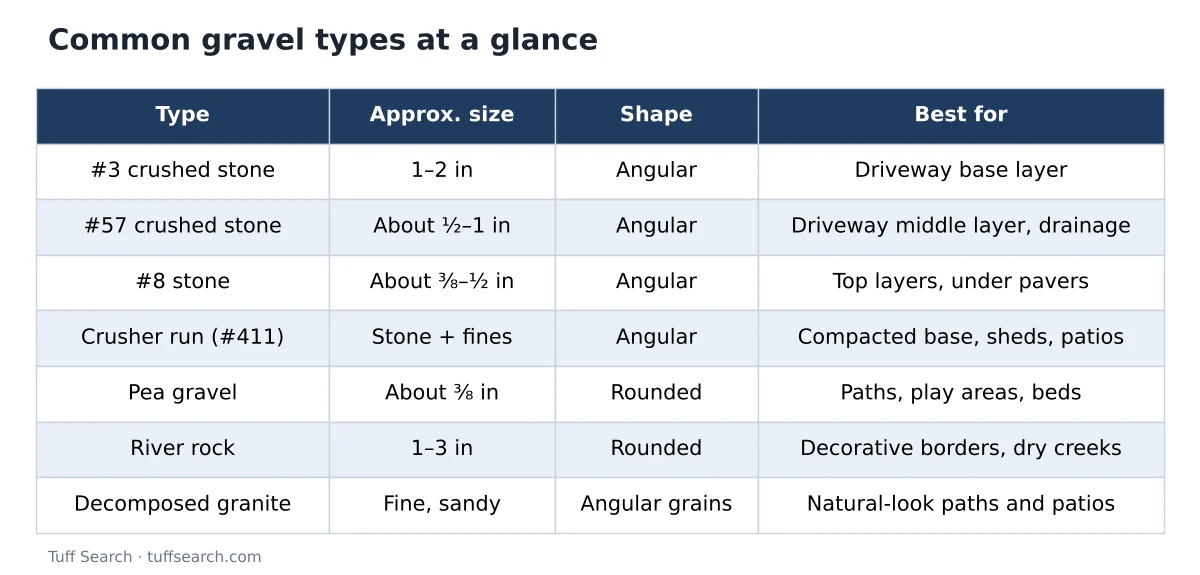
In the US, crushed stone is often sold by numbers based on standard sieve sizes – a lower number usually means larger stone. Names such as #57 or #411 are common, but suppliers and regions differ, so ask to see the material or a size chart before ordering.
Try it with your numbersGravel CalculatorFind how much gravel you need for a driveway, path or base in cubic yards, m³, tons and bags, with density by gravel type and a coverage chart.Open calculatorBest gravel for a driveway
A durable gravel driveway is built in layers rather than from one product:
- Base: large crushed stone such as #3 (or a similar large size) for strength and drainage.
- Middle: #57 crushed stone, which locks into the base.
- Top: a finer angular stone such as crusher run or #8 that compacts into a smooth, firm surface.
Avoid using only pea gravel on a driveway – it spreads, ruts and is hard to drive on, especially on slopes. Compact each layer, keep a slight crown so water runs off, and use edging to hold the stone in.
Best gravel for paths and patios
- Comfortable paths: decomposed granite or a fine crushed stone, compacted, gives a firm surface suitable for walking and wheelbarrows.
- Decorative paths: pea gravel looks good and is pleasant underfoot in small doses, but needs firm edging and a stable base beneath.
- Under patio pavers: a compacted crushed-stone base, then a bedding layer as specified by the paver manufacturer.
Best gravel for drainage
Drainage needs open gaps between stones for water to flow, so use clean, washed crushed stone with no fine dust – #57 is a common choice for French drains and around drainage pipes. Crusher run is the wrong choice here: its fines pack down and block water. Wrap the stone in filter fabric so soil does not wash in and clog it over time.
How much gravel will you need?
Work out the volume for each layer (length × width × depth) and convert it to tons using the density of your material – about 1.4 tons per cubic yard is a reasonable planning figure for ordinary gravel. If you are choosing between gravel, asphalt and concrete for a drive, the asphalt calculator estimates asphalt tonnage and our asphalt driveway maintenance guide shows what upkeep to expect.
Tips before you order
- Ask whether stone is priced per ton or per cubic yard, and convert before comparing quotes.
- Check delivery fees and minimum loads – bulk is far cheaper than bags for anything larger than a small bed.
- Request washed stone for drainage, unwashed crusher run for compacted bases.
- Lay a geotextile fabric under driveways and paths to stop the gravel sinking into the soil.
Frequently asked questions
A layered build: large crushed stone at the base, #57 in the middle and a fine angular top such as crusher run or #8 stone.
A washed crushed stone roughly ½ to 1 inch in size, widely used for drainage and driveway middle layers.
Not on its own. Its rounded stones shift and rut under tyres; it works better for paths and beds.
Crushed stone mixed with stone dust (fines). It compacts into a very firm base but does not drain freely.
Clean, washed angular stone without fines, such as #57, wrapped in filter fabric.
Related calculators
Related articles
- Asphalt Driveway Maintenance: How to Make Your Driveway Last
- How Much Asphalt Do I Need? Tons, Area and Thickness Explained
- House Cleaning Checklist: Daily, Weekly, Monthly and Seasonal Tasks


