A cholesterol test usually reports several numbers, and two of them pull in opposite directions. LDL is often called “bad” cholesterol and HDL “good” cholesterol. This guide explains what each one does, the ranges labs and doctors use, and how the numbers fit together. It is general information – your doctor interprets your results alongside your blood pressure, family history and other risks.
What cholesterol is
Cholesterol is a waxy fat your body needs to build cells and make hormones and vitamin D. It travels in the blood inside particles called lipoproteins. The type of lipoprotein – not the cholesterol itself – is what makes it “good” or “bad”.
LDL: low-density lipoprotein
LDL carries cholesterol to the tissues. When there is too much of it, cholesterol can build up in artery walls as plaque, narrowing the arteries and raising the risk of heart attack and stroke. That is why LDL is called bad cholesterol and why lowering a high LDL is a main goal of treatment.
Try it with your numbersCholesterol Ratio CalculatorCalculate your total cholesterol to HDL, LDL to HDL and triglyceride to HDL ratios and non-HDL cholesterol in mg/dL or…Open calculatorHDL: high-density lipoprotein
HDL helps carry cholesterol away from the arteries back to the liver, which removes it from the body. Higher HDL has generally been linked with lower heart-disease risk, so it is called good cholesterol. Raising HDL with medicine has not been shown to protect the heart in the same way, so doctors focus mainly on LDL and overall risk.
Cholesterol levels chart (adults)
| Measure | Desirable (mg/dL) | Borderline | High |
|---|---|---|---|
| Total cholesterol | Below 200 | 200–239 | 240 and above |
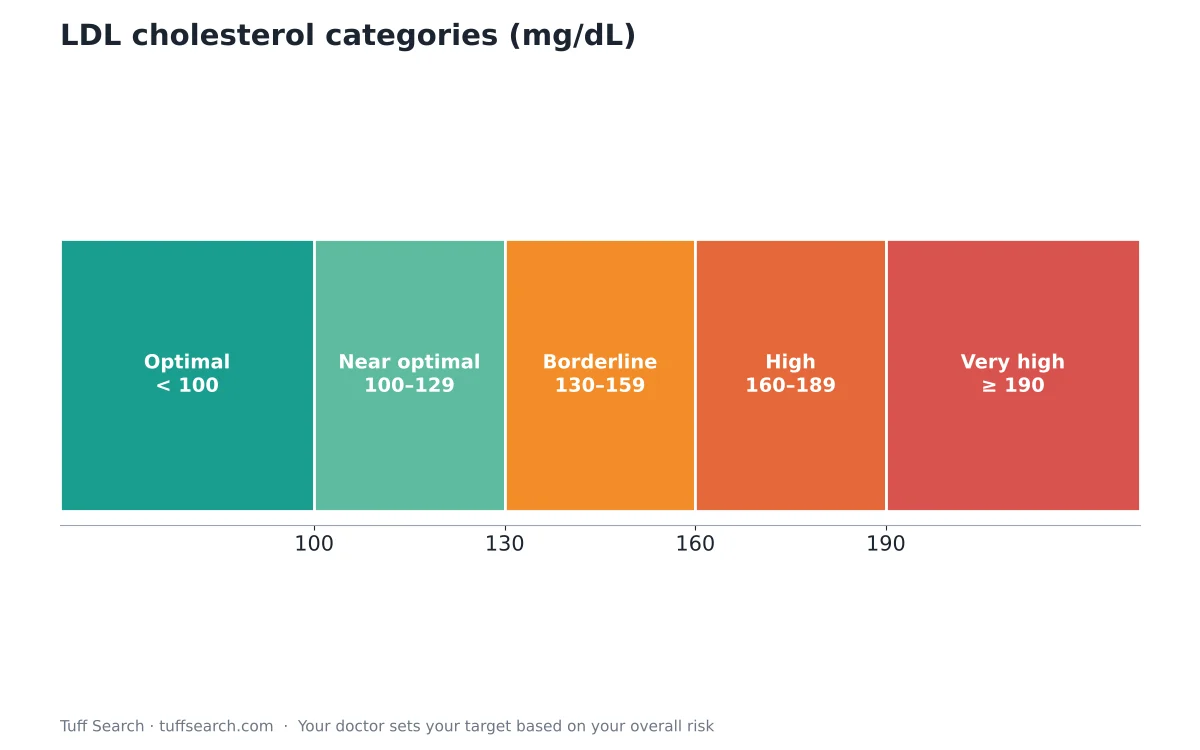
| LDL cholesterol | Below 100 (optimal); 100–129 near optimal | 130–159 | 160–189 high; 190+ very high |
| HDL cholesterol | 60 and above is protective | — | Low: below 40 (men), below 50 (women) |
| Triglycerides | Below 150 | 150–199 | 200–499 high; 500+ very high |
Categories follow the U.S. National Cholesterol Education Program (ATP III). Your personal target can be lower, especially if you already have heart disease, diabetes or other risk factors.
Converting mg/dL and mmol/L
The U.S. reports cholesterol in milligrams per decilitre (mg/dL); the UK, Canada, Australia and much of Europe use millimoles per litre (mmol/L). To convert cholesterol, divide mg/dL by 38.67 (200 mg/dL ≈ 5.2 mmol/L). For triglycerides, divide by 88.57 (150 mg/dL ≈ 1.7 mmol/L).
Triglycerides and non-HDL cholesterol
Triglycerides are a different blood fat that stores energy from food. High levels are linked with heart disease and, when very high, pancreatitis. Non-HDL cholesterol is total cholesterol minus HDL – all the potentially harmful cholesterol in one number. With total cholesterol of 200 mg/dL and HDL of 50 mg/dL, non-HDL is 150 mg/dL.
The cholesterol ratio
Some reports also show total cholesterol divided by HDL. With total 200 and HDL 50, the ratio is 4.0. A lower ratio is generally better; many labs treat under 5 as acceptable and under 3.5 as very good. Work out your ratio, non-HDL and an LDL estimate with the cholesterol ratio calculator.
What affects your numbers
- Diet: replacing saturated fat with unsaturated fat tends to lower LDL. See saturated vs unsaturated fat.
- Physical activity: regular exercise can raise HDL and lower triglycerides.
- Body weight, smoking and alcohol: losing excess weight and stopping smoking both improve the lipid profile.
- Genes: some people have very high LDL from birth (familial hypercholesterolaemia) and need medical treatment.
- Other conditions and medicines: thyroid, kidney and liver conditions and some medicines change cholesterol levels.
When to get tested
Recommendations vary by country and by your risk. Many guidelines advise adults to have their cholesterol checked every few years, more often if results are high or you have other risk factors. Ask your doctor how often you should be tested and what your personal targets are.
Frequently asked questions
LDL carries cholesterol to the tissues and can build up in arteries; HDL carries cholesterol back to the liver for removal. That is why LDL is called bad and HDL good cholesterol.
Below 100 mg/dL is considered optimal for most adults. Your doctor may set a lower target if you have a higher risk of heart disease.
60 mg/dL or higher is considered protective. Below 40 mg/dL for men or 50 mg/dL for women is considered low.
Divide by 38.67. For example, 200 mg/dL is about 5.2 mmol/L.
Related calculators
Related articles
- Saturated vs Unsaturated Fat: Healthy Fat Intake Guide
- What Is a Normal Resting Heart Rate? (By Age and Fitness)
- How to Calculate Your Target Weight From BMI (Formula)