Your resting heart rate is the number of times your heart beats per minute when you are calm and still. It is one of the simplest health measurements you can take at home, and tracking it over time can tell you a lot about your fitness, stress and recovery.
Normal range for adults
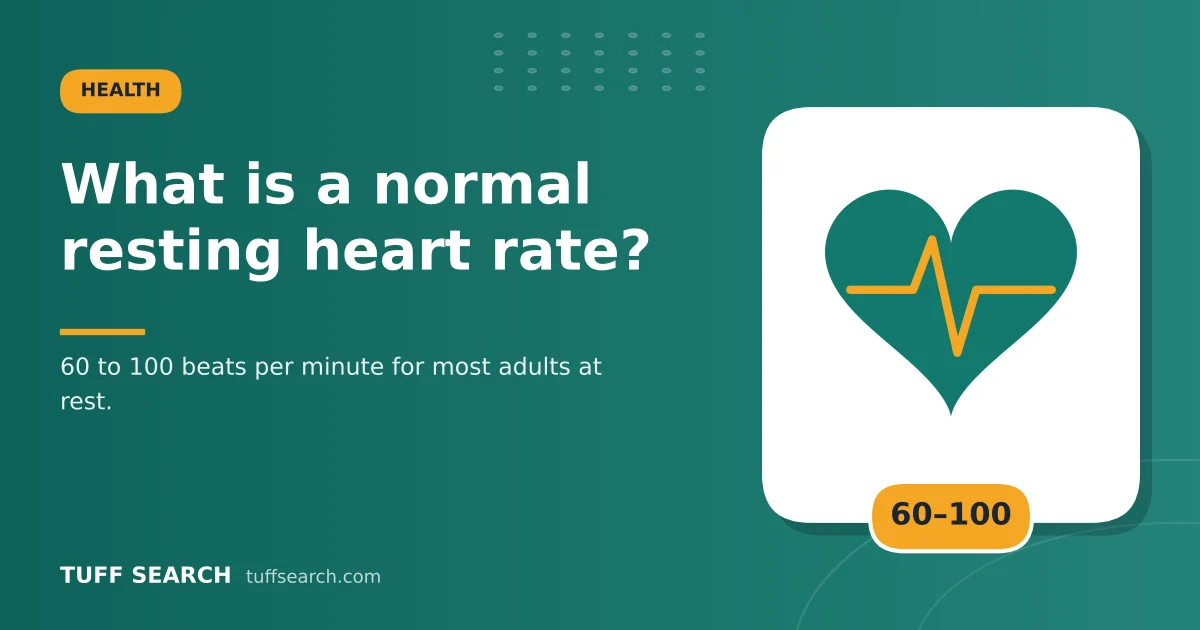
For most adults, a normal resting heart rate is between 60 and 100 beats per minute (bpm), according to the American Heart Association. Many fit adults sit at the lower end, and well-trained athletes can be below 60 – sometimes around 40 – because their heart pumps more blood with each beat.
| Group | Typical resting heart rate |
|---|---|
| Adults | 60–100 bpm |
| Well-trained athletes | Often below 60 bpm |
| Children | Higher than adults; varies with age |
How to measure your resting heart rate
- Measure in the morning, before you get out of bed, or after sitting quietly for at least five minutes.
- Place two fingers (not your thumb) on the inside of your wrist below the thumb, or on the side of your neck.
- Count the beats for a full 60 seconds, or count for 30 seconds and double it.
- Repeat on several days and use the average – single readings vary.
Fitness watches estimate heart rate from light sensors. They are usually close at rest but can be less accurate during movement.
Try it with your numbersCardiac Output CalculatorCalculate cardiac output from heart rate and stroke volume (CO = HR × SV).Open calculatorWhat changes your heart rate
- Fitness: regular aerobic exercise tends to lower resting heart rate over time.
- Stress, anxiety and strong emotions raise it.
- Caffeine and nicotine raise it.
- Heat and humidity can raise it.
- Body position: it is often a little higher standing than lying down.
- Illness, fever and dehydration raise it.
- Medicines: beta-blockers slow the heart; some others speed it up.
Heart rate and cardiac output
Your heart rate is half of the equation for how much blood your heart pumps:
Cardiac output = Heart rate × Stroke volume
At 70 bpm with a stroke volume of 70 mL, the heart pumps about 4.9 litres a minute. A trained athlete at 50 bpm with a stroke volume of 100 mL pumps about 5.0 litres – the same output with fewer, stronger beats. That is why a low resting heart rate in a fit person is usually a good sign. Explore the relationship with the cardiac output calculator.
Target heart rate for exercise
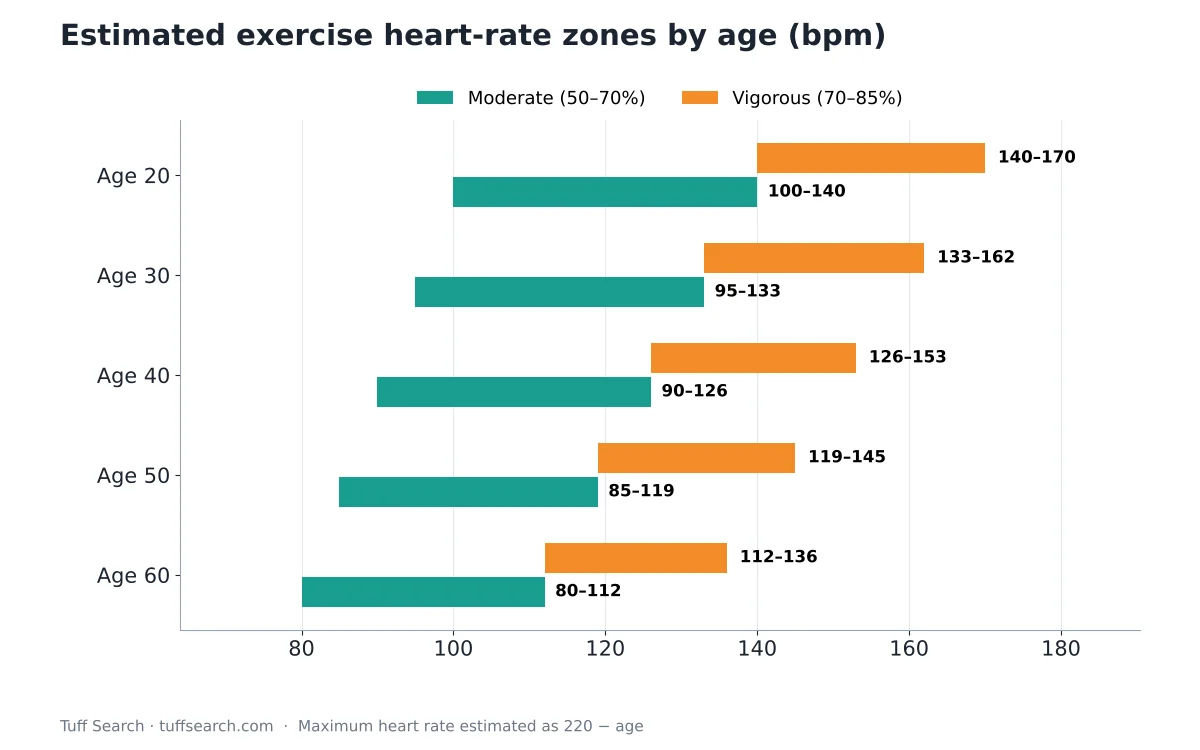
A rough estimate of maximum heart rate is 220 minus your age. Moderate-intensity exercise is often described as about 50–70% of that maximum and vigorous exercise as about 70–85%. The formula is only an estimate; real maximum heart rates vary by several beats either way, and some medicines change them.
Brisk walking is the most common way to reach moderate intensity – see what counts as brisk walking – and the walking calorie calculator estimates the energy you use.
When to see a doctor
Talk to a doctor if your resting heart rate is consistently above 100 bpm, or below 60 bpm when you are not an athlete – especially if you also feel dizzy, faint, short of breath, have chest pain or notice your heart racing, fluttering or skipping. Seek emergency help for chest pain, fainting or severe shortness of breath.
Important
Important: This article is general educational information, not medical or nutrition advice. Talk to a doctor or registered dietitian before changing your diet, especially if you are pregnant, under 18, or have a medical condition.
Frequently asked questions
60 to 100 beats per minute for most adults. Fit people and athletes are often lower.
In a fit, healthy person with no symptoms it is usually fine. If you feel dizzy, faint or short of breath, see a doctor.
First thing in the morning, before getting out of bed, measured over a full minute.
A common estimate is 220 minus your age – for example, 180 bpm at age 40. It is only an approximation.
Related calculators
Related articles
- What Is Brisk Walking? Pace, Steps and Benefits
- HDL vs LDL Cholesterol: Good vs Bad Explained
- How to Calculate Your Target Weight From BMI (Formula)