“Eight glasses a day” is easy to remember but it is not how health authorities set water guidance. Your needs depend on your size, activity, climate and health – and a good share of your water comes from food. Here is what the official reference values say and how to turn them into everyday terms.
The official reference values
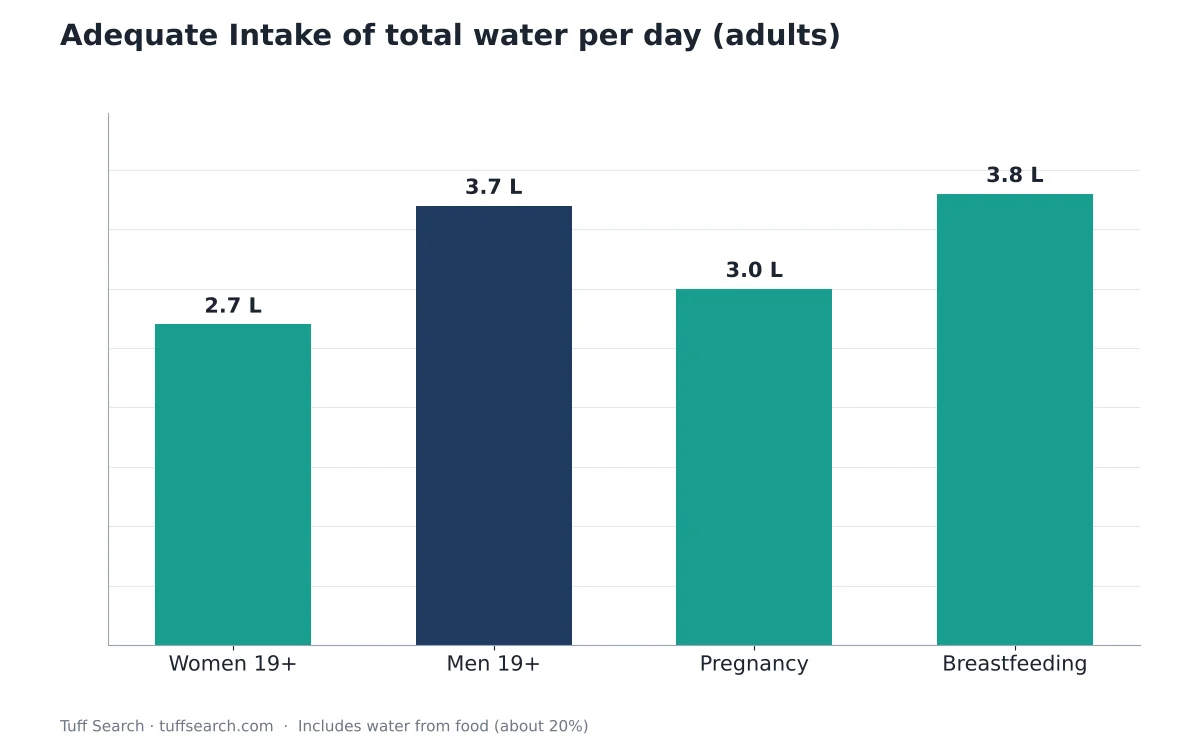
The U.S. National Academies set an Adequate Intake (AI) for total water – from all drinks and food – for healthy adults in a temperate climate:
| Group | Total water per day | About in U.S. cups |
|---|---|---|
| Women (19+) | 2.7 litres | ≈ 11 cups |
| Men (19+) | 3.7 litres | ≈ 15–16 cups |
| Pregnancy | 3.0 litres | ≈ 13 cups |
| Breastfeeding | 3.8 litres | ≈ 16 cups |
Food typically supplies about 20% of total water – fruit, vegetables, soups, yogurt and cooked grains are all mostly water. That leaves roughly 3 litres (about 13 cups) from drinks for men and about 2.2 litres (about 9 cups) for women. Look up your own value with the DRI calculator.
Everything counts – mostly
- Water, milk, tea, coffee, juice and soup all count toward your fluid intake.
- Caffeinated drinks in moderate amounts still hydrate overall, though water is the best everyday choice.
- Sugary drinks count as fluid but add calories, and alcohol increases urine output.
When you need more water
- Exercise: replace what you sweat. Drinking before, during and after longer or harder sessions helps.
- Hot or humid weather, and high altitude.
- Illness with fever, vomiting or diarrhoea.
- Pregnancy and breastfeeding (see the table).
- Larger body size and very active jobs.
Walking an hour on a hot day uses more fluid than an hour at a desk; the walking calorie calculator is a reminder of how much work your body is doing.
Simple ways to check you are drinking enough
- You rarely feel thirsty.
- Your urine is pale yellow most of the day.
- You do not get headaches, dizziness or unusual tiredness that improve after drinking.
Dark urine, a dry mouth, headache and dizziness can be signs of dehydration. Older adults may feel less thirsty, so regular drinks through the day help.
Can you drink too much?
Yes, though it is uncommon. Drinking very large amounts in a short time – for example during long endurance events without replacing salt – can dilute the sodium in your blood (hyponatraemia), which can be dangerous. People with heart failure or kidney disease may be told to limit fluids; follow your doctor’s advice.
What about the “half your body weight in ounces” rule?
Rules such as drinking half your body weight in ounces, or eight 8-ounce glasses, are easy rules of thumb, not official guidelines. They can be a starting point, but thirst, urine colour, activity and climate are better day-to-day guides for most healthy adults.
Easy habits
- Keep a refillable bottle with you.
- Drink a glass with each meal.
- Add water-rich foods such as fruit, vegetables and soups.
- Drink more on hot days and around exercise.
Important
Important: This article is general educational information, not medical or nutrition advice. Talk to a doctor or registered dietitian before changing your diet, especially if you are pregnant, under 18, or have a medical condition.
Frequently asked questions
The Adequate Intake for total water is about 2.7 litres a day, including water from food – roughly 2.2 litres (about 9 cups) from drinks.
About 3.7 litres of total water a day, including food – roughly 3 litres (about 13 cups) from drinks.
Yes. Moderate amounts of coffee and tea count toward your daily fluid intake.
For many women in a temperate climate, 2 litres of drinks plus water from food meets the guideline. Men and active people usually need more.
Related calculators
Related articles
- Saturated vs Unsaturated Fat: Healthy Fat Intake Guide
- How Much Protein Do You Need Per Day?
- How to Calculate Your Target Weight From BMI (Formula)