Protein builds and repairs muscles, organs, skin and enzymes, so getting enough every day matters at every age. The official minimum is easy to calculate from your body weight; this guide shows how, when you may need more, and how to reach your target with ordinary food.
The protein RDA
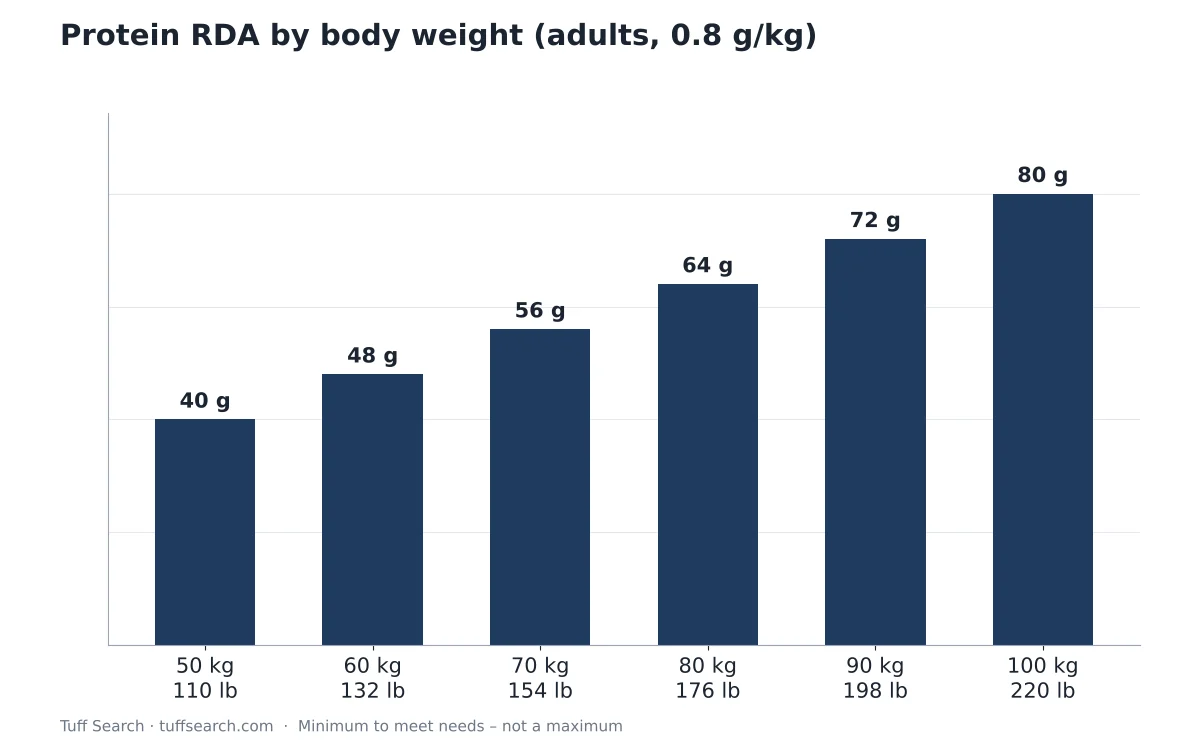
For healthy adults, the Recommended Dietary Allowance (RDA) for protein is 0.8 grams per kilogram of body weight per day.
Daily protein (g) = Body weight (kg) × 0.8 | Body weight (lb) × 0.36
A 75 kg (165 lb) adult needs at least 75 × 0.8 = 60 g a day. The RDA is set to meet the needs of nearly all healthy people – it is a minimum to prevent deficiency, not an ideal for everyone.
When you may need more
| Situation | Typical guidance |
|---|---|
| Healthy adults | 0.8 g/kg (RDA) |
| Pregnancy | 1.1 g/kg (about 71 g a day for the reference woman) |
| Breastfeeding | 1.3 g/kg (about 71 g a day for the reference woman) |
| Older adults and regular exercisers | Often advised 1.0–1.6 g/kg |
| Losing weight | Toward the higher end, to help keep muscle |
The DRI tables also set an Acceptable Macronutrient Distribution Range of 10–35% of calories from protein for adults. On 2,000 calories, that is 50–175 g a day, so even generous intakes fit within the range. Look up your RDA and other nutrient targets with the DRI calculator.
Try it with your numbersDRI CalculatorGet your Dietary Reference Intakes – RDA, AI and upper limits for vitamins, minerals, protein, fibre and water – by…Open calculatorProtein in common foods
| Food | Typical serving | Protein (approx.) |
|---|---|---|
| Chicken breast, cooked | 100 g (3.5 oz) | About 30 g |
| Canned tuna, drained | 85 g (3 oz) | About 20 g |
| Greek yogurt, plain | 170 g (6 oz) | About 15–18 g |
| Lentils, cooked | 1 cup (about 200 g) | About 18 g |
| Milk | 1 cup (240 ml) | About 8 g |
| Egg | 1 large | About 6 g |
| Almonds | 28 g (1 oz) | About 6 g |
| Firm tofu | 100 g | About 10–17 g (varies by brand) |
Values vary by product and preparation; check the label or the USDA FoodData Central database for exact figures.
A sample day at about 75 g
- Breakfast: Greek yogurt with fruit and a few almonds – about 22 g
- Lunch: lentil soup and a wholegrain roll – about 20 g
- Snack: a glass of milk – about 8 g
- Dinner: 85 g of fish or chicken with vegetables and rice – about 25 g
Spreading protein across meals, rather than eating most of it at dinner, is an easy habit that many dietitians recommend.
Plant-based protein
Beans, lentils, chickpeas, tofu, tempeh, edamame, nuts, seeds and whole grains all provide protein. Eating a variety through the day supplies all the essential amino acids, so vegetarians and vegans can meet their needs with planning.
Can you eat too much protein?
For healthy people, intakes within the 10–35% range are considered acceptable. People with kidney disease may need to limit protein and should follow their doctor’s advice. Protein powders are a convenience, not a necessity, for most people.
Putting it together
If you are trying to lose weight, combine your protein target with a sensible calorie target – see calorie deficit explained and estimate your daily calories with the TDEE calculator.
Important
Important: This article is general educational information, not medical or nutrition advice. Talk to a doctor or registered dietitian before changing your diet, especially if you are pregnant, under 18, or have a medical condition.
Frequently asked questions
At least 0.8 g per kg of body weight for healthy adults – about 56 g for a 70 kg person. Pregnancy, breastfeeding, older age and regular exercise can raise needs.
About 0.36 g per pound of body weight for the RDA.
For most healthy adults eating around 2,000 calories or more, 100 g sits within the 10–35% acceptable range. People with kidney disease should follow medical advice.
Meat, poultry, fish, eggs, dairy, tofu and tempeh, beans and lentils are among the richest sources.
Related calculators
Related articles
- Calorie Deficit Explained: How to Set a Safe Target
- Saturated vs Unsaturated Fat: Healthy Fat Intake Guide
- How Much Water Should You Drink a Day?