Caffeine in coffee varies far more than most people expect. The bean, roast, grind, brewing method and cup size all change how much ends up in your mug. Here is what official guidance says and how to estimate your own intake.
How much caffeine is in a cup?
The U.S. Food and Drug Administration (FDA) gives these ranges in its consumer guidance:
| Drink | Caffeine (FDA range) |
|---|---|
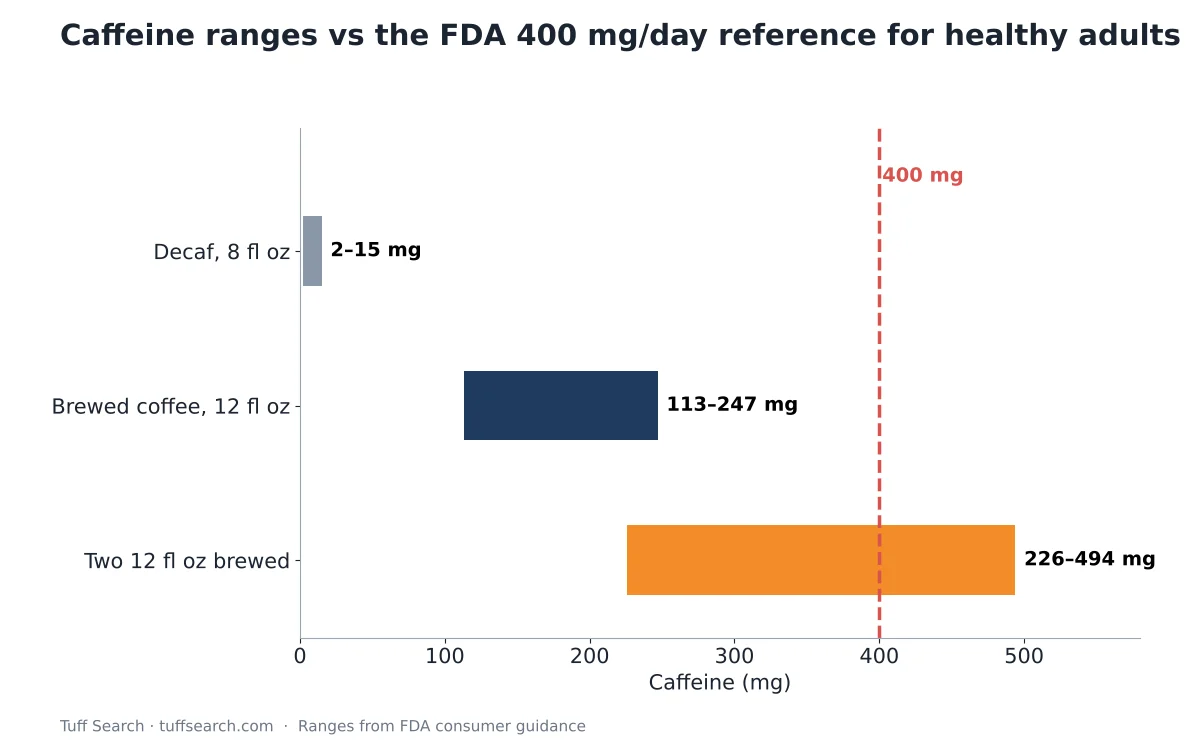
| Brewed coffee, 12 fl oz | 113 – 247 mg |
| Decaf coffee, 8 fl oz | 2 – 15 mg |
The wide range for brewed coffee is the key point: two 12-ounce cups from different places could contain very different amounts.
The 400 mg reference
The FDA says that for healthy adults, 400 milligrams a day is an amount not generally associated with negative effects. People vary in how sensitive they are, and the FDA advises people who are pregnant, trying to become pregnant or breastfeeding to talk to a healthcare provider about caffeine. Children and teens should also be more careful.
Estimate your daily intake
Daily caffeine (mg) = Cups per day × Caffeine per cup (mg)
Example
two 12-ounce coffees a day at the low end of the FDA range is 2 × 113 = 226 mg; at the high end it is 2 × 247 = 494 mg, which is above the 400 mg reference. The same habit can sit either side of the line depending on the coffee.
Don’t forget other sources
- Tea, cola and other soft drinks
- Energy drinks and caffeinated shots
- Chocolate
- Some pain relievers and other medicines (check the label)
Signs you may be having too much
The FDA lists effects such as insomnia, jitters, anxiety, a fast heart rate, an upset stomach, nausea and headache. If you notice these, cutting back gradually can help avoid withdrawal headaches.
Ways to cut down
- Switch one cup a day to decaf or half-caf.
- Choose a smaller cup size.
- Avoid caffeine later in the day to protect sleep.
- Track what you drink for a week to see your real total.
Estimate it with a calculator
The coffee calculator helps estimate caffeine from your cups and brew. To get the brew strength right, see the coffee to water ratio guide.
Important
Important: This article is general educational information, not medical or nutrition advice. Talk to a doctor or registered dietitian before changing your diet, especially if you are pregnant, under 18, or have a medical condition.
Frequently asked questions
The FDA lists 113 to 247 mg for a 12-ounce brewed coffee and 2 to 15 mg for an 8-ounce decaf. The exact amount depends on the beans and brewing.
Roughly two to three 12-ounce cups, but it depends on how strong your coffee is.
Yes, a small amount: about 2 to 15 mg per 8-ounce cup according to the FDA.
It is a general reference for healthy adults. People who are pregnant, breastfeeding, sensitive to caffeine, taking certain medicines or under 18 should get personal advice.
Related calculators
Related articles
- Coffee to Water Ratio: How to Brew Better Coffee by Weight
- How to Make a Sourdough Starter From Scratch
- How to Make Ice Cream Without a Machine (3 Ways)