Your due date – or estimated date of delivery – is a planning date, not an appointment. It marks 40 weeks from the first day of your last period, the middle of a normal range of birth dates. Here is how it is worked out, why it can change and how much weight to put on it.
How the due date is first estimated
The standard method adds 280 days to the first day of your last menstrual period (LMP). It assumes a regular 28-day cycle with ovulation about 14 days after your period started. If your cycles are longer or shorter, or you are unsure of the date, this estimate can be off by a week or more.
Why an early scan is more accurate
Measuring the embryo on an ultrasound in the first trimester is the most accurate way to date a pregnancy, because early embryos grow at a very consistent rate. The American College of Obstetricians and Gynecologists (ACOG) recommends changing the LMP-based date when the early scan differs by more than 5 days before 9 weeks, or by more than 7 days between 9 weeks and 13 weeks 6 days. Later scans are less precise for dating because babies’ growth varies more.
Try it with your numbersDue Date CalculatorEstimate your due date from your last period, conception date, IVF transfer or scan. See how many weeks pregnant you are, your trimester and key dates.Open calculatorIVF due dates
With IVF, the date of embryo transfer and the embryo’s age are known exactly, so the due date is calculated from these rather than from a period – making it the most precise kind of dating.
Will my baby come on the due date?
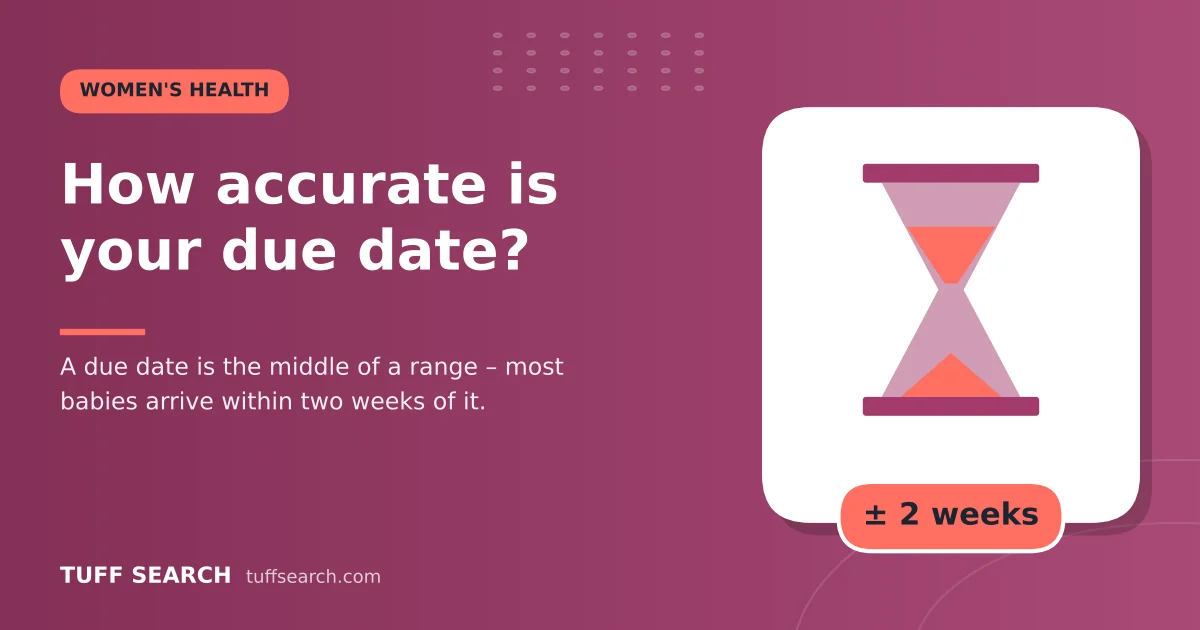
Probably not on that exact day. Only a small share of babies are born on their due date; most arrive within about two weeks either side of it. First babies, the length of your own cycles and many other factors influence when labour begins. That is why it is better to think of a ‘due month’ when planning.
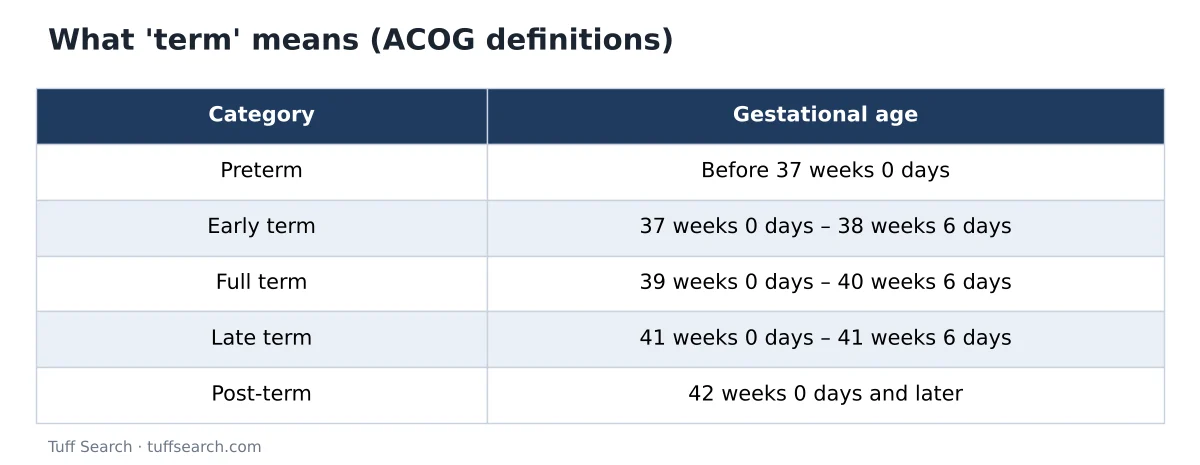
Babies born from 39 weeks are considered full term. ACOG introduced these categories because outcomes for babies born at 37–38 weeks differ from those born at 39–40 weeks.
Reasons a due date may change
- An early dating scan disagrees with the period-based estimate by more than the thresholds above.
- Your last period date was uncertain, or you had irregular cycles.
- You became pregnant soon after stopping hormonal contraception or while breastfeeding, when cycles are often irregular.
- Once a reliable early scan has set the date, later scans usually should not change it again – differences later on are more likely to reflect the baby’s size.
Working out conception from your due date
Conception usually happens about two weeks after the start of the last period, so it is roughly 266 days (38 weeks) before the due date. Because sperm can survive several days and ovulation timing varies, this gives a window rather than an exact date. Our guide to how many days after your period you can get pregnant explains the fertile window.
What to do with your due date
- Use it to plan prenatal appointments, scans and work leave.
- Write down your LMP and cycle length to share at your first appointment.
- Keep track of your period dates in future with the period calculator.
- Speak to your midwife or doctor about any concerns, especially if you are unsure of your dates.
Important
Important: This article is general educational information, not medical or nutrition advice. Talk to a doctor or registered dietitian before changing your diet, especially if you are pregnant, under 18, or have a medical condition.
Frequently asked questions
It assumes a 28-day cycle, so it can be off by a week or more if your cycles differ or the date is uncertain.
Yes – if a first-trimester scan differs from the period-based date by more than about 5–7 days, the date is usually updated.
No. Most are born within about two weeks before or after it.
39 weeks 0 days to 40 weeks 6 days. 37–38 weeks is early term.
Yes, because the embryo’s age and transfer date are known exactly.
Related calculators
Related articles
- How Many Days After Your Period Can You Get Pregnant?
- When to Take a Pregnancy Test for the Most Accurate Result
- How Much Water Should You Drink a Day? What the Guidelines Say