
Taking a pregnancy test too early is the most common reason for a confusing result. Home tests look for a hormone that only starts to rise after a fertilised egg implants in the uterus, so timing matters. This guide explains when to test, how early tests work and what to do next.
This article is general information, not medical advice. Contact a doctor, nurse or sexual health service for advice about your situation.
The short answer
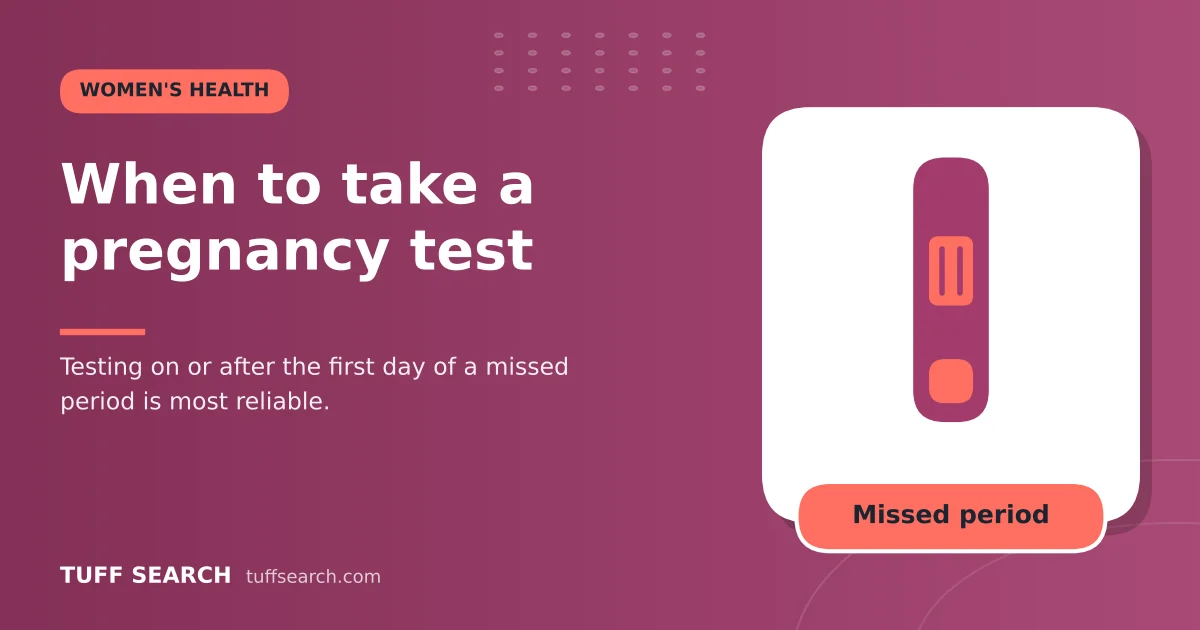
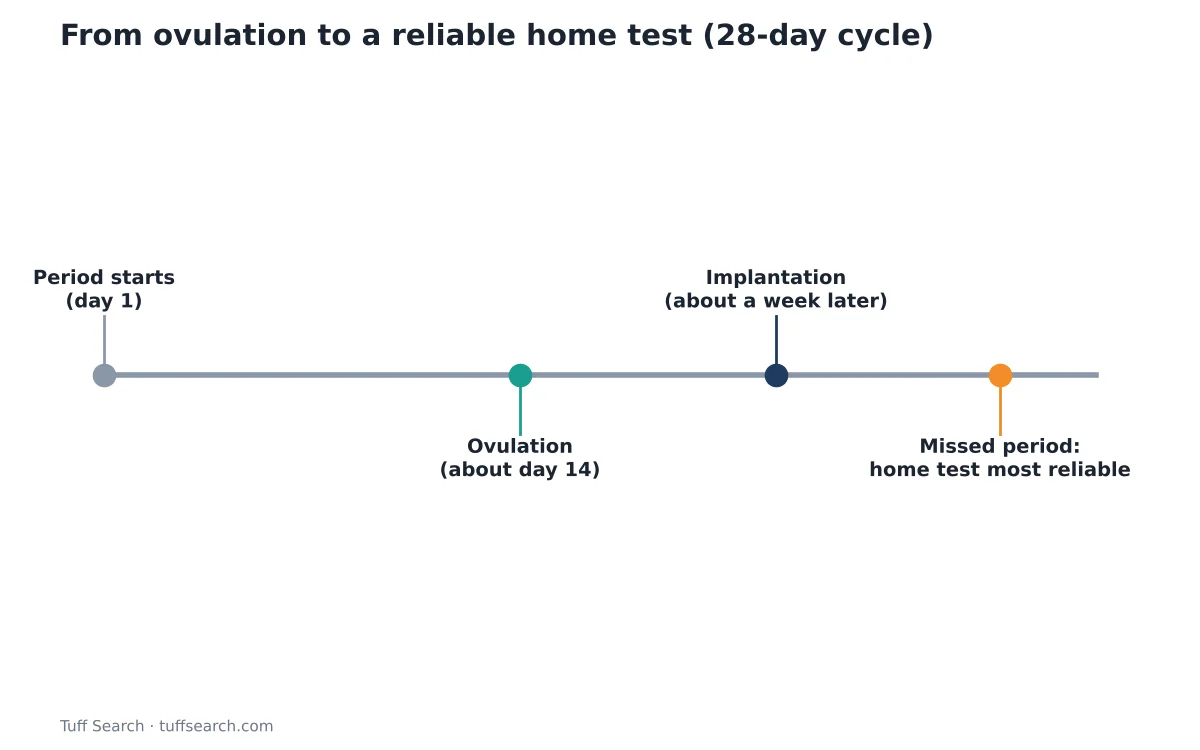
For the most accurate result, take a home pregnancy test on or after the first day of your missed period. The U.S. Office on Women’s Health notes that some tests can be used earlier, but results are generally more accurate after a missed period.
How pregnancy tests work
Home tests detect human chorionic gonadotropin (hCG) in urine. Your body starts making hCG after a fertilised egg implants in the lining of the uterus. In early pregnancy, hCG levels rise quickly, roughly doubling every two days, so a test that is negative one day can be positive a few days later.
- Blood tests at a clinic can detect hCG about 10 days after conception.
- Urine tests usually need a little longer – typically around two weeks or more after conception.
- Implantation happens later than expected in some pregnancies, so a test can be negative even on the day a period is due.
If your periods are irregular
If you do not know when your period is due, the Office on Women’s Health suggests testing 36 days after the start of your last period, or four weeks after you had sex. Tracking your cycle with the period calculator makes it easier to know when a period is late.
Getting the most accurate result
- Test with first-morning urine, when hCG is most concentrated, especially if you test early.
- Read the instructions for your brand – sensitivity and timing vary.
- Read the result within the time stated, not hours later.
- Check the expiry date.
Understanding your result
| Result | What it may mean | What to do |
|---|---|---|
| Positive | hCG detected – you are likely pregnant | Contact a doctor or midwife to arrange care |
| Negative, period still late | You may have tested too early | Retest in 2–3 days |
| Negative twice, still no period | Possibly not pregnant – or other causes of a late period | See a doctor |
| Faint line | Usually a positive with low hCG | Retest in 48 hours |
False positives are uncommon but can happen, for example with some fertility medicines that contain hCG or a very early pregnancy loss. False negatives are more common and usually mean the test was taken too early.
When to see a doctor
- After a positive test, to confirm the pregnancy and start antenatal care.
- If you have tested negative but your period is more than a week late.
- Straight away if you have severe pain on one side of your abdomen, heavy bleeding, shoulder-tip pain or feel faint – these need urgent assessment.
Related reading
Learn how ovulation timing works in how many days after your period you can get pregnant. If you are curious about multiples, the chances of having twins calculator explains how age and other factors affect twin rates.
Frequently asked questions
Some sensitive tests can show a result a few days before a missed period, but results are most reliable from the first day of a missed period.
Yes, if you test too early or use diluted urine. Retest in two to three days if your period has not started.
First thing in the morning, when urine is most concentrated, especially for early testing.
About 36 days after the start of your last period, or four weeks after sex, according to the Office on Women’s Health.
Related calculators
Related articles
- How Many Days After Your Period Can You Get Pregnant?
- How to Calculate Take-Home Pay From Your Salary (2026)
- 2026 Federal Income Tax Brackets Explained With Examples