
Dogs age much faster than people, and large breeds age faster than small ones. Recognising the early signs of ageing lets you adjust your dog’s care before small problems become painful ones. Here is what to watch for and how to help.
When is a dog a senior?
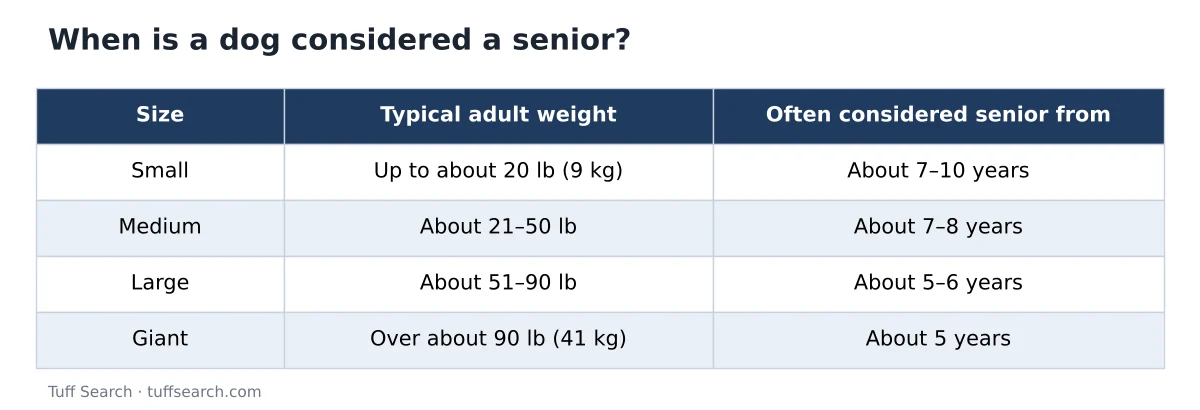
There is no single birthday that makes a dog ‘senior’. The American Kennel Club notes that large breeds are often considered seniors at around 5–6 years, while small dogs may not reach that stage until about 7 or later. To compare your dog’s age with human years, our guide to when dogs stop growing explains how size shapes the whole life course.
Common signs of ageing
- Greying around the muzzle and eyes.
- Slower to get up, stiffness after rest, reluctance on stairs or jumping into the car – often early arthritis.
- Sleeping more and tiring sooner on walks.
- Cloudy-looking eyes, poorer vision or hearing.
- Weight gain from lower activity, or weight loss from dental or other health problems.
- Bad breath, tartar or difficulty chewing.
- Changes in thirst, urination or house-training accidents.
- Confusion, pacing at night, staring at walls or forgetting familiar routines – possible signs of canine cognitive dysfunction.
Many of these are not ‘just old age’ and can be treated or managed. Sudden changes, weight loss, increased thirst or new lumps should always be checked by a vet.
Try it with your numbersDog Age CalculatorConvert your dog's age to human years by size, from small breeds to giants. Compare the vet rule with the DNA-based formula and see a dog age chart.Open calculatorHealth problems more common in older dogs
| Condition | What you might notice |
|---|---|
| Arthritis | Stiffness, limping, slower on stairs |
| Dental disease | Bad breath, dropping food, pawing at the mouth |
| Kidney disease | Drinking and urinating more, weight loss |
| Heart disease | Coughing, tiring quickly, faster breathing at rest |
| Hypothyroidism | Weight gain, lethargy, coat changes |
| Cancer | New lumps, weight loss, reduced appetite |
| Cognitive dysfunction | Confusion, night-time restlessness, toileting accidents |
How to help your senior dog
- Vet check-ups every six months. Ask about blood and urine tests, which can catch kidney, liver and thyroid problems early.
- Keep them lean. Extra weight puts strain on joints; ask your vet about a senior diet and portion sizes.
- Keep moving, but gently. Shorter, more frequent walks and swimming maintain muscle and joint health.
- Look after teeth. Brushing and dental check-ups prevent painful infections.
- Make the home easier. Non-slip rugs, ramps or steps, a supportive orthopaedic bed and raised food bowls if your vet recommends them.
- Keep the mind active. Puzzle feeders, scent games and short training sessions help cognitive health.
- Keep routines predictable, especially for dogs with hearing or vision loss.
Quality of life
As dogs get older, talk regularly with your vet about pain control and quality of life. Signs such as not eating, not wanting to move, laboured breathing or more bad days than good ones are important to discuss. Cat owners can find similar life-stage advice in our guide to how long cats live, and the cat age calculator converts a cat’s age to human years.
Frequently asked questions
Around 5–6 years for large and giant breeds and about 7–10 years for small breeds.
Many vets recommend check-ups every six months, with blood and urine tests as advised.
Some benefit from senior formulas, but needs vary. Ask your vet based on your dog’s weight and health.
Regular, gentle exercise – often shorter but more frequent walks – adjusted to your dog’s joints and energy.
Confusion, getting stuck in corners, night-time pacing, changes in sleep, house-training accidents and seeming not to recognise people.
Related calculators
Related articles
- When Do Dogs Stop Growing? Typical Ages by Breed Size
- How Long Do Cats Live? Lifespan, Life Stages and How to Help
- Dog Pregnancy Week by Week: Due Date and What to Expect