Gestation – the length of pregnancy – ranges from a little over two weeks in a hamster to almost two years in an elephant. In general, bigger animals carry their young for longer, but there are plenty of exceptions. This chart brings together typical figures for common pets and farm animals, with tips for estimating a due date.
Gestation chart
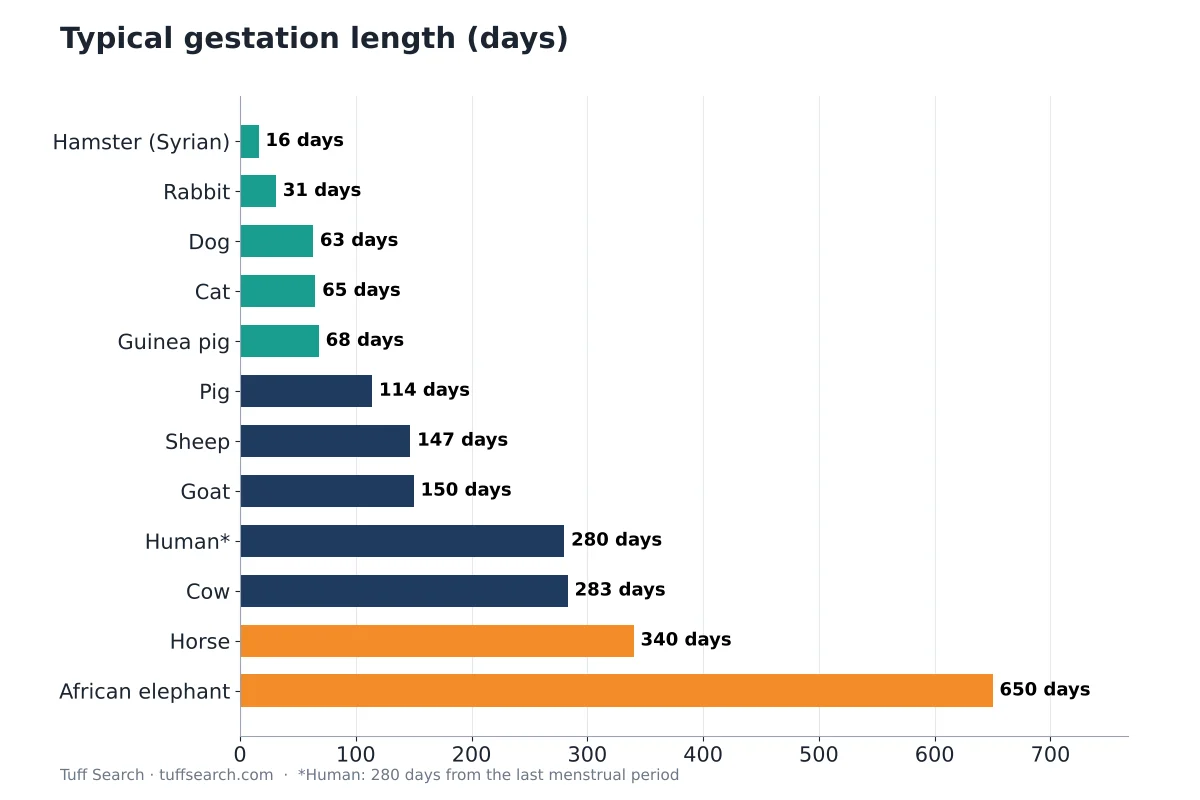
| Animal | Typical gestation | Usual range | Young per birth (typical) |
|---|---|---|---|
| Hamster (Syrian) | 16 days | 15–18 days | Several |
| Rabbit | 31 days | 28–33 days | Several |
| Guinea pig | About 68 days | 59–72 days | 1–6 |
| Dog | 63 days | About 58–68 days | Varies by breed |
| Cat | 63–66 days | About 58–70 days | Often 3–5 |
| Pig | 114 days | “3 months, 3 weeks, 3 days” | Large litters |
| Sheep | 147 days | About 144–152 days | 1–3 |
| Goat | 150 days | About 145–155 days | 1–3 |
| Cow | 283 days | About 274–292 days | Usually 1 |
| Horse | About 340 days | About 320–370 days | Usually 1 |
| African elephant | About 22 months | Around 640–660 days | Usually 1 |
Figures are typical values from veterinary references and breed guides. Breed, litter size, the age of the mother and the timing of mating all affect the actual length. For comparison, human pregnancy is counted as 280 days (40 weeks) from the first day of the last period, or about 266 days from conception.
How to estimate a due date
Due date ≈ Mating (or breeding) date + Typical gestation length
Example
a dog mated on 1 March would be expected to give birth around 3 May (63 days later). If mating happened over several days, count from the first date for the earliest likely birth and from the last date for the latest. Vets can narrow the window with hormone tests, ultrasound or X-rays later in pregnancy.
- Dogs: the dog pregnancy calculator adds 63 days and shows a week-by-week timeline. See also dog pregnancy week by week.
- Cats: the cat pregnancy calculator adds 63 days and marks a normal window of about day 58 to day 70.
- Cattle: the cow gestation calculator uses 283 days and lets you adjust for breed.
Why gestation length varies
- Body size and metabolism – larger animals usually have longer pregnancies.
- How developed the young are at birth: animals whose young can walk soon after birth (such as horses and cows) tend to have long gestations; animals born blind and helpless (such as hamsters, rabbits, kittens and puppies) have shorter ones.
- Litter size – very large litters may arrive a little early.
- Breed differences within a species.
Preparing for the birth
- Arrange a vet check during pregnancy, especially for a first litter.
- Prepare a quiet, warm birthing area a week or two before the due date.
- Learn the signs of labour for the species and when to call the vet – for example, strong straining for a long time without a birth.
- Keep your vet’s out-of-hours number handy.
Frequently asked questions
About 63 days – roughly nine weeks – from mating, usually between about 58 and 68 days.
About 63 to 66 days, with a normal range of roughly 58 to 70 days.
About 283 days on average, usually between about 274 and 292 days depending on breed.
Among land mammals, elephants – about 22 months.
Related calculators
- Dog Pregnancy Calculator
- Cat Pregnancy Calculator
- Cow Gestation Calculator
- Dog Heat Cycle Calculator
Related articles
- Dog Pregnancy Week by Week: Due Date and What to Expect
- When Do Dogs Stop Growing? Ages by Breed Size
- Cat Heat Cycle Explained: Signs, Length and Timing