

Asphalt is flexible, quick to lay and good value, but sun, water, oil and frost slowly break it down. A little maintenance each year keeps water out of the base – the single most important thing for a long-lasting driveway. This guide covers what to do and when.
Caring for a new asphalt driveway
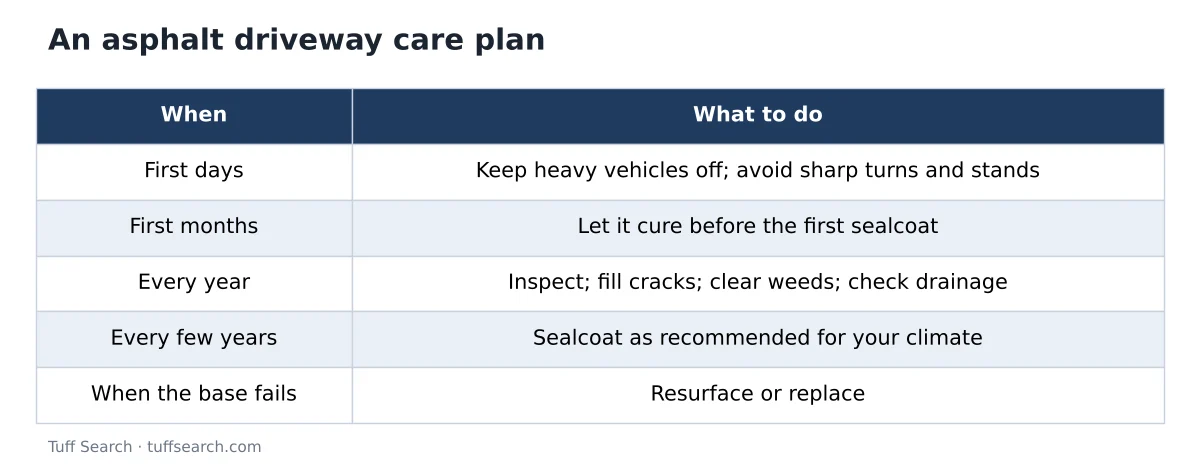
Fresh asphalt stays relatively soft while it cures, especially in hot weather.
- Keep vehicles off for the period your contractor recommends – often a few days.
- Avoid heavy vehicles, such as delivery trucks or campers, for longer.
- Don’t turn the steering wheel while the car is stationary – it scuffs the surface.
- Avoid bike or motorbike stands, ladder feet and trailer jacks, which can dent soft asphalt.
- Expect the surface to look a little uneven in texture at first; it settles.
Sealcoating
Sealcoat is a protective layer that shields asphalt from UV light, water, oil and salt. Many contractors recommend waiting several months – often until the following season – before the first coat, so the asphalt can cure. After that, a fresh coat every few years is typical, depending on climate, traffic and the product.
- Choose dry weather with temperatures in the range the product label requires, with no rain forecast.
- Fill cracks and clean oil stains first.
- Sweep and wash the surface; let it dry completely.
- Apply thin, even coats with a squeegee or brush – two thin coats are better than one thick one.
- Keep traffic off for the time on the product label.
Too much sealcoat, too often, can build up and crack. More is not better.
Filling cracks
Cracks let water into the base, where freeze–thaw cycles and traffic make them grow. Fill them while they are small:
- Hairline cracks are usually covered by sealcoat.
- Wider cracks need a crack filler – pourable or rubberised filler for narrow cracks, cold patch for wide ones.
- Clean out dirt and weeds and make sure the crack is dry first.
- Spider-web or “alligator” cracking over a wide area usually means the base underneath is failing – patching the surface won’t fix it.
Fixing potholes
- Remove loose material and water.
- Square off the edges if possible.
- Fill with cold-patch asphalt in layers, compacting each one firmly (a tamper or the back of a car tyre works).
- Leave the patch slightly proud of the surface; traffic will compact it.
For a bigger repair, the asphalt calculator estimates the tonnage of hot-mix or patch you need from the area and depth.
Drainage
Standing water is asphalt’s biggest enemy. Make sure downpipes and gutters drain away from the driveway, the edges are not undercut by soil erosion, and puddles don’t form in the same place after rain. Persistent puddles can mean the surface has sunk and may need levelling.
Stains, weeds and edges
- Blot oil and fuel spills straight away – they soften asphalt. Use an absorbent like cat litter, then a degreaser.
- Pull weeds from cracks and edges, then fill the cracks.
- Avoid driving on the unsupported edges, which crumble easily.
Winter care
- Use a plastic shovel or a snow blower with the blade set slightly above the surface.
- Choose de-icers labelled as safe for asphalt and use them sparingly.
- Clear snow before it is compacted into ice by traffic.
Resurface or replace?
| Condition | Likely solution |
|---|---|
| Faded, a few small cracks | Crack fill and sealcoat |
| Many cracks but solid base, no sinking | Resurface (an overlay of new asphalt) |
| Widespread alligator cracking, deep potholes, sinking | Remove and replace, including base repairs |
An overlay only lasts if the base beneath it is sound. Ask a contractor to check the base before resurfacing. For a full replacement, read how much asphalt you need to estimate materials and compare quotes.
Frequently asked questions
Typically every few years, depending on climate, traffic and the product. Wait until new asphalt has cured – often several months – before the first coat.
Usually a few days for cars and longer for heavy vehicles, but follow your contractor’s advice, especially in hot weather.
Yes. Fill cracks and clean the surface first, then sealcoat once the filler has cured.
When the base has failed – shown by widespread alligator cracking, sinking or deep potholes.
Related calculators
Related articles
- How Much Asphalt Do I Need? Tons, Area and Thickness
- How to Calculate Take-Home Pay From Your Salary (2026)
- 2026 Federal Income Tax Brackets Explained With Examples


