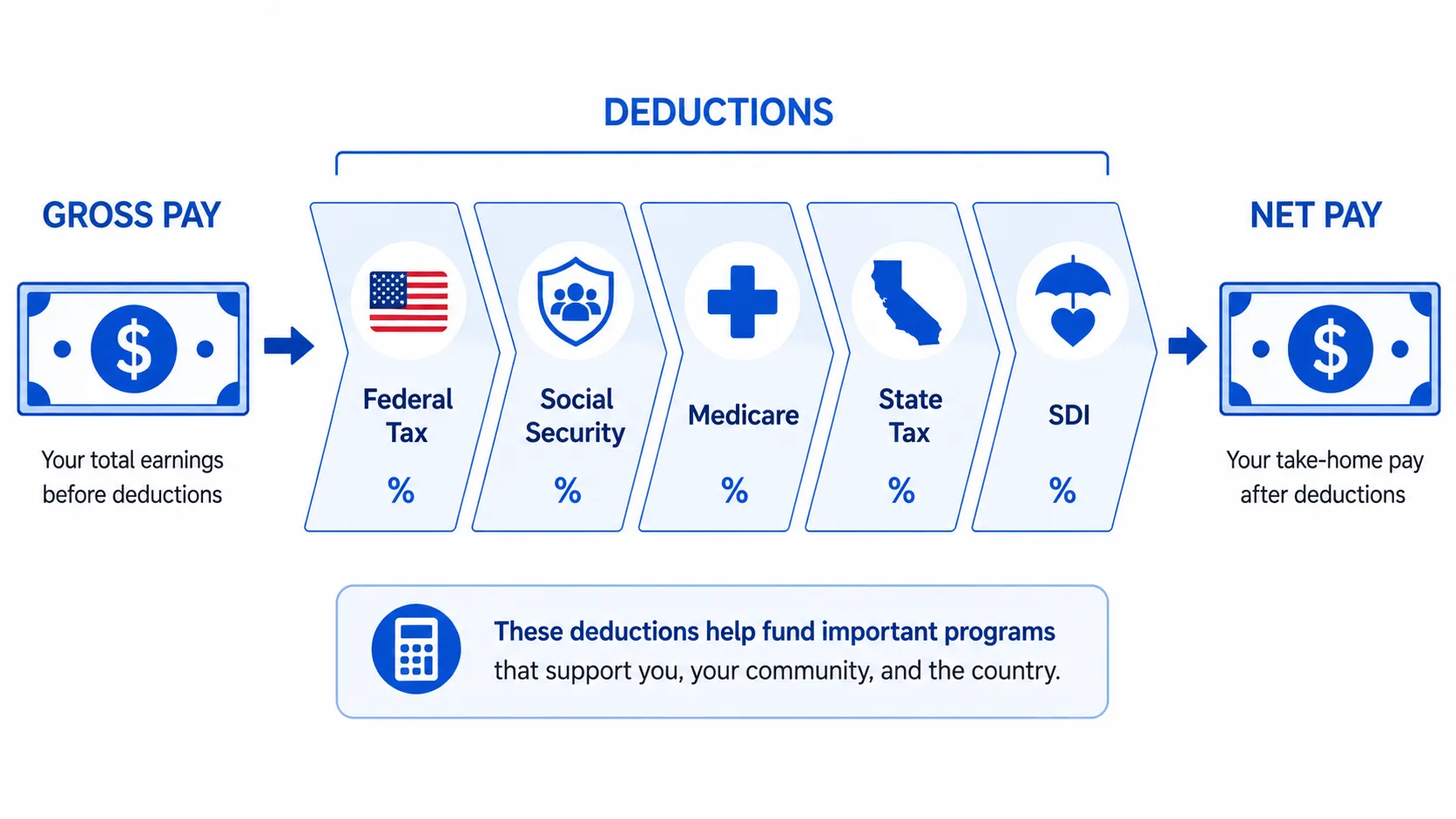
How Your California Paycheck Moves Through 5 Deductions
Five deductions shape every California paycheck: federal income tax, Social Security, Medicare, state income tax, and SDI. Each one chips away at your gross pay before it reaches your bank account. Understanding the gross pay vs net pay gap starts here. Our california salary paycheck calculator walks through each deduction below, so nothing feels like a mystery.
Federal Deductions
FICA taxes take a fixed bite from every paycheck. Social Security claims 6.2%, and Medicare claims 1.45%. Together, they total 7.65% of your gross wages. Beyond FICA, your federal income tax depends on your W-4 withholding choices. Your filing status, dependents, and any extra withholding all shift this number. Two people earning the same salary often see different federal withholding because their W-4 forms differ.
California State Deductions
California layers state-specific deductions on top of federal ones. State income tax follows a progressive bracket system, which we explain fully below. Additionally, state disability insurance california rules require a separate payroll deduction that funds short-term benefits. This SDI deduction applies only in California, so out-of-state friends won’t recognize it. Together, state tax and SDI explain a meaningful chunk of the gap between your gross and net pay.
Who Should Use This Calculator
Paycheck math changes depending on how you earn. Salaried employees, hourly workers, and 1099 contractors each face different rules. Therefore, a single generic formula won’t give you an accurate number. The sections below match the calculation to your actual income type.
Salaried Employees
Salaried pay stays consistent because your annual salary divides evenly across pay periods. Whether you’re paid weekly, biweekly, or monthly, your gross paycheck amount won’t change. Our california salary paycheck calculator automatically divides your salary correctly, so you never have to do that math by hand.
Hourly Workers
Hourly pay needs extra care before tax calculations even start. California overtime law requires 1.5x pay after 8 hours daily, and 2x pay after 12 hours. If you skip this step, your tax estimate runs too high. Our california hourly paycheck calculator applies regular, 1.5x, and 2x rates correctly before withholding kicks in.
1099 and Self-Employed Workers
Self-employed workers face a deduction that W-2 employees never see. Because no employer splits the FICA cost with you, you owe the full 15.3% self-employment tax yourself. Many general calculators miss this completely, and the results mislead freelancers and contractors. Our california paycheck calculator for 1099 factors in this full rate, so your estimate stays accurate.
Understanding California's Tax Brackets
California uses nine progressive tax brackets, ranging from 1% up to 13.3% for top earners. Your income doesn’t get taxed at one flat rate. Instead, each portion of your income falls into its own bracket. For example, imagine you earn $70,000 a year. Part of that income gets taxed at 1%, another portion at higher rates, until you reach your top marginal bracket. Our california payroll tax calculator runs this math instantly, layer by layer. If you’ve used a basic ca paycheck tax calculator before, you know manual bracket math gets confusing fast. California’s income tax brackets range from 1% to 13.3%, applied progressively based on income level.
State Disability Insurance (SDI) Explained
State Disability Insurance is a mandatory California payroll deduction that funds short-term disability and paid family leave benefits. Every eligible employee pays into this fund automatically through payroll withholding. You don’t choose to opt in. It happens with every paycheck, regardless of your income type. Most other states don’t require this deduction at all, which surprises many transplants moving to California for work. SDI exists specifically to support workers during medical leave or family caregiving needs, funded entirely through employee contributions rather than employer contributions.
Frequently Asked Questions
Have questions or feedback about this calculator? Feel free to Contact Us — we’re always looking to improve your experience.
Why Use Tuff Search's California Paycheck Calculator
Most paycheck tools split salaried, hourly, and 1099 calculations across separate pages, or skip self-employment income entirely. This calculator covers all three income types in one place, so you never have to guess which tool fits your situation. We update our rates every year to reflect current federal and California tax brackets. Additionally, our hourly calculations apply accurate overtime rules before tax, so your estimate stays realistic. Whether you’re salaried, hourly, or self-employed, this tool gives you a number you can trust. For a deeper look at how marginal rates work, check our [California Tax Bracket Guide] for more detail.
Scroll Up and Check Your Real Take-Home Pay
You’ve seen how the deductions work. Now scroll up and enter your numbers into the california paycheck calculator to see your instant, deduction-by-deduction breakdown. No guesswork, no confusion just your real california paycheck calculator after taxes number, ready in seconds.