What Is a Ketogenic Diet?
The ketogenic diet shifts your body’s primary fuel source from carbohydrates to fat. Once you understand this single shift, every macro number on this page will make sense, and the calculator results will feel less like guesswork and more like a science you can actually follow and trust.
How Ketosis Works
Ketosis is a metabolic state in which the body uses fat as its primary fuel source instead of glucose, typically achieved by limiting daily net carbs to 20 – 50 grams. When carb intake drops this low, your liver starts converting fat into ketones, which your brain and muscles burn for energy instead of sugar. This shift usually takes two to four days for most people, though it varies based on activity level, prior carb intake, and even how much water and electrolytes you’re consuming during the transition.
Why Macros Matter on Keto
Hitting the right macronutrients ratio determines whether you actually stay in ketosis or accidentally slip out of it without realizing why. Eat too many carbs, even “healthy” ones like sweet potatoes or too much fruit, and your body switches back to burning glucose instead of fat almost immediately. This is exactly why a calculator beats guessing your fat, protein, and net carbs all need to land in a specific range, every single day, to keep your body in fat-burning mode instead of bouncing in and out of ketosis.
How to Use the Tuff Search Keto Calculator
Using the keto calculator takes less than a minute and removes all the guesswork from your macro targets, so you stop relying on rough estimates from a fitness influencer’s caption. The keto macro calculator below walks you through three simple steps.
Step 1: Enter Your Personal Details
Start with your age, sex, height, weight, and activity level. These details feed directly into your BMR (basal metabolic rate) calculation, which is the foundation every macro target is built on. Without an accurate BMR, even a perfect keto ratio will hand you the wrong calorie target.
Step 2: Choose Your Goal
Select weight loss, maintenance, or muscle building. This single choice changes your entire macro output, since each goal requires a different calorie target and protein ratio tailored to what your body actually needs to do. Most calculators skip this step entirely and hand everyone the same generic numbers Tuff Search doesn’t.
Step 3: Read Your Results
Your results show daily gram targets for fat, protein, and net carbs your personal keto diet macros, calculated specifically for you rather than copied from a generic chart. Hit these numbers consistently, and your body stays in ketosis day after day, without the guesswork that derails most first attempts.
Understanding Your Keto Macros
Once you have your numbers from the keto macronutrients calculator, it helps to understand what each one actually means and why it sits where it does. This section breaks down all three macros so your results feel like information you can act on, not just numbers on a screen you have to trust blindly.
How Many Carbs on Keto Per Day?
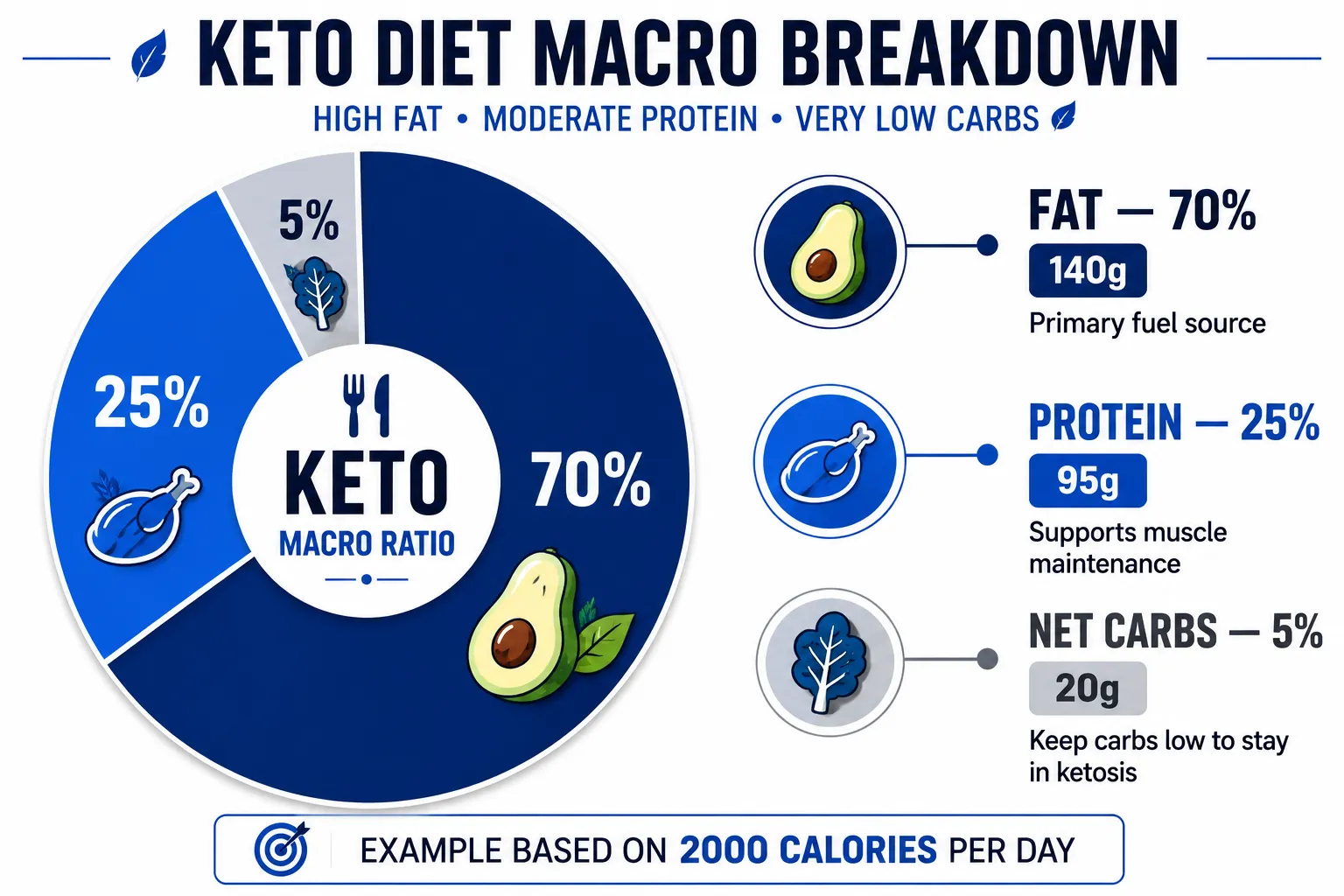
Net carbs are calculated by subtracting dietary fiber from total carbohydrates, and most people need to stay under 20 – 50 grams of net carbs per day to maintain ketosis. This typically works out to around 5% of your daily calories, which feels restrictive at first but becomes second nature within a couple of weeks. How many carbs on keto you can eat depends on your individual carb tolerance, but most beginners start near the lower end of that range for faster results before slowly testing higher amounts later.
How Much Fat on Keto Per Day?
Fat makes up 70, 75% of your daily calories on keto, making it your primary fuel source rather than an afterthought you sprinkle in. On a typical 1,800-calorie plan, this works out to roughly 140 to 150 grams of fat per day, often from sources like olive oil, avocado, butter, and fatty cuts of meat. This number often surprises beginners who spent years avoiding fat, but high fat intake is exactly what keeps your body running on ketones instead of glucose.
Your Keto Protein Intake
Protein sits at 20–25% of daily calories, a range chosen to maintain the ideal fat-to-protein ratio for optimal ketone production. Gluconeogenesis the process where the body converts amino acids into glucose is demand-driven, not supply-driven, meaning your body only makes glucose when it actually needs it, not simply because protein is available. The keto protein intake calculator sets this range automatically based on your weight and goal, keeping protein high enough to protect muscle without crowding out fat as your primary fuel source.
Keto Macros for Your Specific Goal
A one-size-fits-all macro guide ignores the fact that your goal changes your numbers significantly, sometimes by hundreds of calories a day. This is where a personalized keto weight loss calculator earns its place over a generic chart pulled from a forum post or an outdated blog.
Keto Macros for Weight Loss
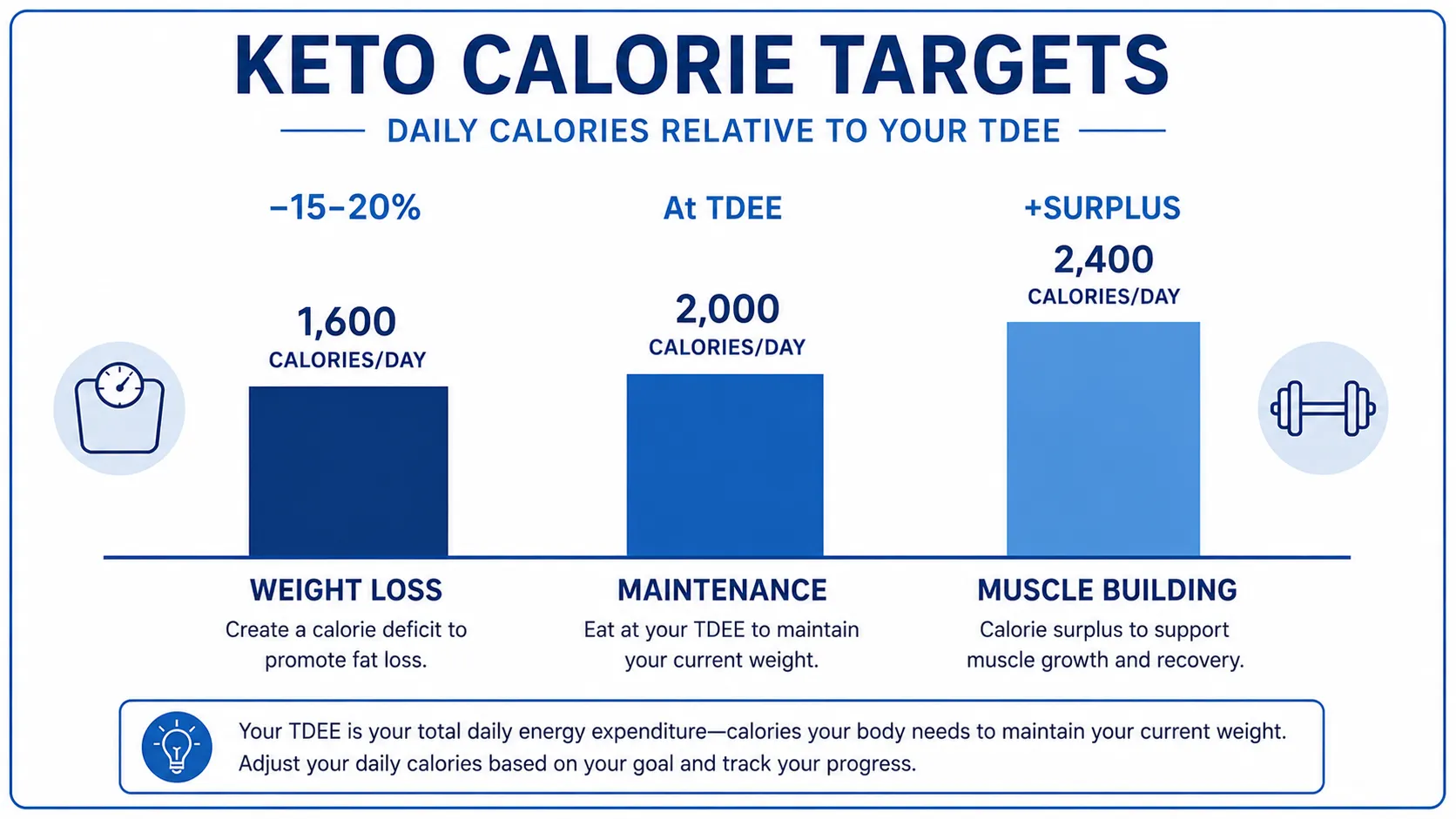
Keto macros for weight loss typically involve a 15 – 20% calorie deficit applied to your TDEE, while keeping fat at 70 – 75%, protein at 20 – 25%, and net carbs under 5% of daily calories. This is the most common goal among first-time keto users, and the calculator applies this deficit automatically once you select it no manual math required on your end, and no second-guessing whether your deficit is too aggressive or too mild.
Maintenance and Muscle Building on Keto
If your goal is maintenance, you eat at your TDEE with the same standard keto ratio, simply holding steady instead of cutting or building. For muscle building, the calculator applies a slight calorie surplus and nudges protein toward 25 – 30% to support muscle repair and recovery between training sessions. A keto meal calculator can then help you plan actual meals around whichever target applies to you, turning gram targets into real plates of food.
Frequently Asked Questions
Have questions or feedback about this calculator? Feel free to Contact Us — we’re always looking to improve your experience.
Why Use the Tuff Search Keto Calculator?
This keto calculator is completely free — no account, no email, no subscription. It adjusts your macro split based on your specific goal, not a one-size-fits-all formula. Also, it updates instantly as you change your inputs. Because it runs on your personal data and not generic averages, the results are more accurate than most free tools online.
Furthermore, the calculator is built for beginners and experienced keto dieters alike. The results are clear, immediate, and ready to use. Try the Tuff Search keto macro calculator today and know exactly what to eat
Ready to stop guessing and start seeing results?
Use the Tuff Search keto calculator above, enter your details, and get your personalized daily fat, protein, and carb targets right now. Your keto journey starts with the right numbers. Scroll up and find yours.